


11. Mai 2022
The current waves of DDoS attacks are becoming more sophisticated every year. In addition, according to the current Threat-Intel Report by NetSCOUT, more sophisticated attack methods such as CarpetBombing can be found in the „DDoS mainstream“. For this reason, we would like to present a generally unknown, but already ITW-seen (**) attack method, which we have successfully used in several DDoS RedTeaming engagements.
Brief background: Mobile providers and also some broadband providers use a technology called 0 Carrier-Grade NAT (CGNat) / Large Scale NAT, which gathers several users behind central IPs.
We have observed with a handful of protection providers that the last-line-of-defence (*) is now and then an IP block for attacker IP, not real scrubbing. This may be valid for blocking the first wave and for a few seconds, especially to prevent damage to the infrastructure being protected. The disadvantage is that a (too long) IP block can be abused by an attacker to block IPs. One can either use IP spoofing for this or, much more mundanely, use attack bots with mobile connections to block the mobile IPs.
This might lead to several hundred up to 15,000 users being locked out of the service at the same time, thanks to the Carier Grade NAT mentioned above. This can be extremely harmfull when you have a lot lot mobile-customers/clients.
We successfully applied this attackmethod several times in DDoS RedTeamings, both for volumetric and application attacks.
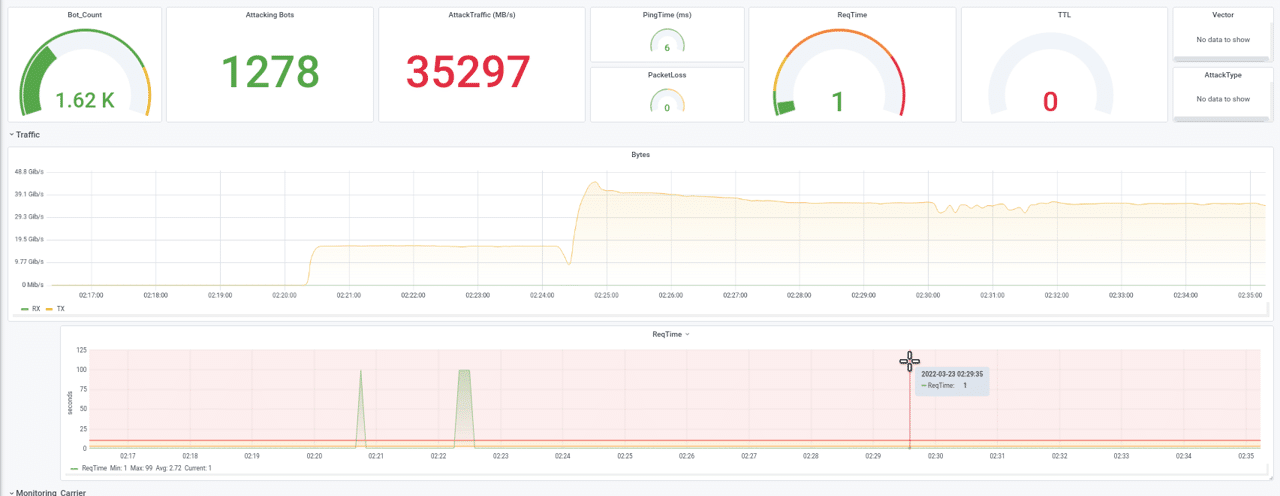
Attack mitigated by IP block, monitoring sees the target „online
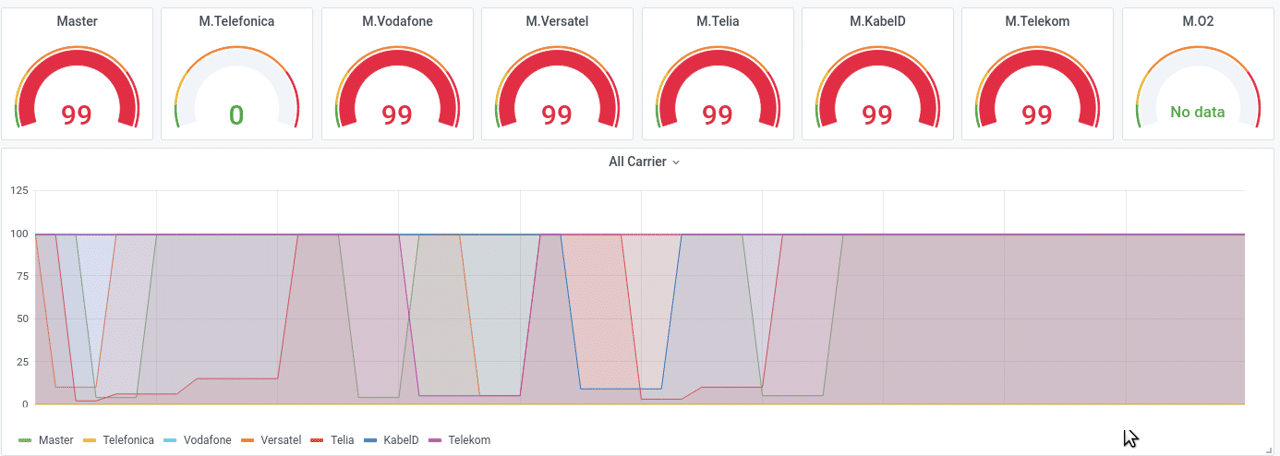
Attack also utilizing mobile providers, separate monitoring from the user’s perspective sees the target „offline/down“, as an IP-block also blocks out legitimate users
- *) for the somewhat simpler providers, it is also the first line/only line of defence ^-^
- **) ITW // ENISA Threat Landscape 2021 Report/Chpt 8: localised DDoS where an attacker interferes with the connectivity of a specific area … using mobile devices/connection
More here.

Fachartikel

RC4-Deaktivierung – so müssen Sie jetzt handeln

Plattform-Engineering im Wandel: Was KI-Agenten wirklich verändern

KI-Agenten im Visier: Wie versteckte Web-Befehle autonome Systeme manipulieren

Island und AWS Security Hub: Kontrollierte KI-Nutzung und sicheres Surfen im Unternehmensumfeld

Wie das iOS-Exploit-Kit Coruna zum Werkzeug staatlicher und krimineller Akteure wurde
Studien

KI als Werkzeug für schnelle, kostengünstige Cyberangriffe

KI beschleunigt Cyberangriffe: IBM X-Force warnt vor wachsenden Schwachstellen in Unternehmen

Finanzsektor unterschätzt Cyber-Risiken: Studie offenbart strukturelle Defizite in der IT-Sicherheit

CrowdStrike Global Threat Report 2026: KI beschleunigt Cyberangriffe und weitet Angriffsflächen aus

IT-Sicherheit in Großbritannien: Hohe Vorfallsquoten, steigende Budgets – doch der Wandel stockt
Whitepaper

Cloudflare Threat Report 2026: Ransomware beginnt mit dem Login – KI und Botnetze treiben die Industrialisierung von Cyberangriffen

EBA-Folgebericht: Fortschritte bei IKT-Risikoaufsicht unter DORA – weitere Harmonisierung nötig

Böswillige KI-Nutzung erkennen und verhindern: Anthropics neuer Bedrohungsbericht mit Fallstudien

Third Party Risk Management – auch das Procurement benötigt technische Unterstützung

EU-Toolbox für IKT-Lieferkettensicherheit: Gemeinsamer Rahmen zur Risikominderung
Hamsterrad-Rebell

Incident Response Retainer – worauf sollte man achten?

KI‑basierte E‑Mail‑Angriffe: Einfach gestartet, kaum zu stoppen

NIS2: „Zum Glück gezwungen“ – mit OKR-basiertem Vorgehen zum nachhaltigen Erfolg

Cyberversicherung ohne Datenbasis? Warum CIOs und CISOs jetzt auf quantifizierbare Risikomodelle setzen müssen
