


12. Oktober 2022
16% Growth in eCommerce Fraud Losses in Just 12 Months
A new study from Juniper Research has found that the total cost of eCommerce fraud to merchants will exceed $48 billion globally in 2023, from just over $41 billion in 2022. It predicted that this growth will be accelerated by the increasing use of alternative payment methods, such as digital wallets and BNPL (Buy-Now-Pay-Later), which are creating new fraud risks.
The report recommended that fraud prevention vendors focus on building platforms providing AI-powered risk-based scoring, which can be payment method agnostic, to best suit changing market conditions.
Online payment fraud includes losses across the sales of digital goods, physical goods, money transfer transactions and banking, as well as purchases like airline ticketing. Fraudster attacks can include phishing, business email compromises and socially engineered fraud.
- To find out more, see the new report: Online Payment Fraud: Market Forecasts, Emerging Threats & Segment Analysis 2022-2027
- Download the free whitepaper: Fighting Online Payment Fraud in 2022 & Beyond
North America Tops League Table for Fraud
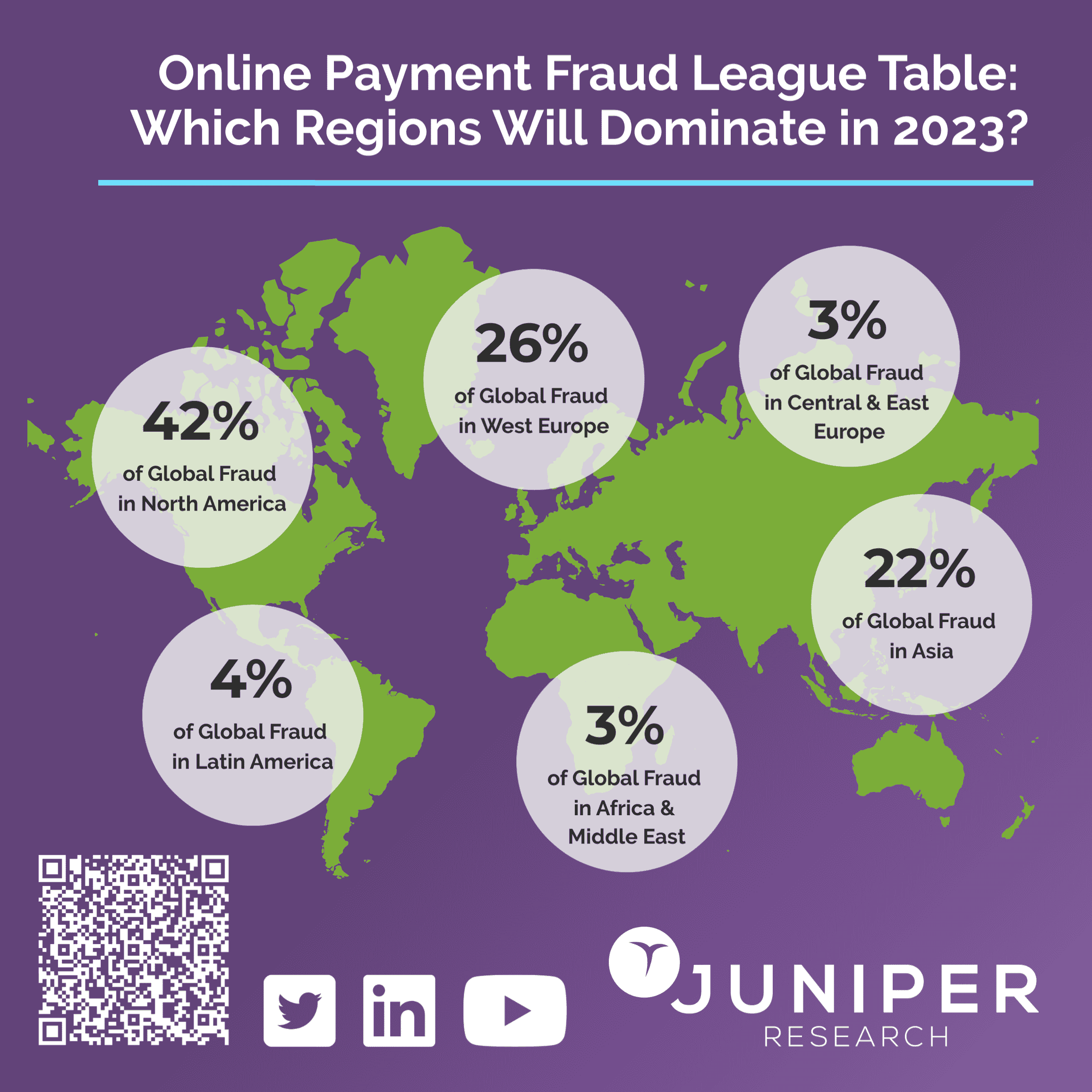
The research identified North America as having the largest fraudulent transaction value of any regional market, accounting for over 42% of global fraud by value in 2023, despite representing less than 7% of banked individuals globally. The research cited the vast volume of data breaches and the broad availability of stolen credit card information as the key risk factors in this market.
Research author Nick Maynard explained: “To combat this fraud, eCommerce merchants must implement simple steps such as address verification, combined with risk-based scoring on transactions, which will allow merchants to best mitigate the massive fraud threats present.”
BNPL Fraud – A Major Risk
Additionally, the research found that the potential of fraud with BNPL is a major risk going forward. Given the delayed nature of BNPL payments, fraudsters can make several illegitimate payments using stolen card details before the fraudulent activity is identified, creating significant risk. In turn, the research recommended that BNPL vendors conduct robust identity verification at the point of onboarding to mitigate these risks.
Online Payment Fraud market research: https://www.juniperresearch.com/researchstore/fintech-payments/online-payment-fraud-research-report
Download the free whitepaper: https://www.juniperresearch.com/whitepapers/fighting-online-payment-fraud-in-2022-beyond

Fachartikel

RC4-Deaktivierung – so müssen Sie jetzt handeln

Plattform-Engineering im Wandel: Was KI-Agenten wirklich verändern

KI-Agenten im Visier: Wie versteckte Web-Befehle autonome Systeme manipulieren

Island und AWS Security Hub: Kontrollierte KI-Nutzung und sicheres Surfen im Unternehmensumfeld

Wie das iOS-Exploit-Kit Coruna zum Werkzeug staatlicher und krimineller Akteure wurde
Studien

KI als Werkzeug für schnelle, kostengünstige Cyberangriffe

KI beschleunigt Cyberangriffe: IBM X-Force warnt vor wachsenden Schwachstellen in Unternehmen

Finanzsektor unterschätzt Cyber-Risiken: Studie offenbart strukturelle Defizite in der IT-Sicherheit

CrowdStrike Global Threat Report 2026: KI beschleunigt Cyberangriffe und weitet Angriffsflächen aus

IT-Sicherheit in Großbritannien: Hohe Vorfallsquoten, steigende Budgets – doch der Wandel stockt
Whitepaper

Cloudflare Threat Report 2026: Ransomware beginnt mit dem Login – KI und Botnetze treiben die Industrialisierung von Cyberangriffen

EBA-Folgebericht: Fortschritte bei IKT-Risikoaufsicht unter DORA – weitere Harmonisierung nötig

Böswillige KI-Nutzung erkennen und verhindern: Anthropics neuer Bedrohungsbericht mit Fallstudien

Third Party Risk Management – auch das Procurement benötigt technische Unterstützung

EU-Toolbox für IKT-Lieferkettensicherheit: Gemeinsamer Rahmen zur Risikominderung
Hamsterrad-Rebell

Incident Response Retainer – worauf sollte man achten?

KI‑basierte E‑Mail‑Angriffe: Einfach gestartet, kaum zu stoppen

NIS2: „Zum Glück gezwungen“ – mit OKR-basiertem Vorgehen zum nachhaltigen Erfolg

Cyberversicherung ohne Datenbasis? Warum CIOs und CISOs jetzt auf quantifizierbare Risikomodelle setzen müssen
