

Governments Are Increasing Digital investments in Response to Global Turmoil
Worldwide government IT spending is forecast to total $589.8 billion in 2023, an increase of 7.6% from 2022, according to Gartner, Inc.
“Global challenges like inflation and workforce scarcity and their local repercussions are testing the abilities of government CIOs to respond with appropriate service delivery mechanisms and organisational accountability,” said Apeksha Kaushik, Principal Analyst at Gartner. “In addition, the “great resignation” and the competing demand from the commercial sector have forced governments to re-examine their approaches to counterbalance internal talent scarcity.”
In 2023, government organizations will sustain commitment to investing in digital programmes. “Governments are increasingly spending their IT budgets to replace legacy applications. Gartner’s 2023 CIO and Technology Executive Survey showed that 57% of government CIOs plan to increase funding for application modernisation in 2023, up from 42% in 2022,” said Kaushik.
This year, they will also ensure their digital projects endure mission impact. An increasing number of government institutions are already putting in place at least one digital metric linked directly to outcomes associated with their organisation’s public purpose or mission. By 2026, Gartner foresees over 75% of governments will gauge digital transformation success by measuring the enduring mission impact.
Software to Remain Highest Spending Segment in 2023
In 2023, software will continue to be the highest growing segment in 2023 (see Table 1). Application modernisation investments will increase supported by more software-as-a service-based solution offerings. The use of low-code application platforms (LCAPs) is also on the rise and will further accelerate legacy modernisation efforts.
Table 1. Worldwide Government IT Spending Forecast (Millions of US Dollars)
|
Segment |
2022 Spending |
2022 Growth (%) |
2023 Spending |
2023 Growth (%) |
| Data Centre Systems | 25,760 | 11.1 | 26,623 | 3.3 |
| Devices | 34,224 | -8.7 | 32,643 | -4.6 |
| Internal Services | 66,940 | -2.3 | 69,178 | 3.3 |
| IT Services | 191,958 | 3.4 | 209,103 | 8.9 |
| Software | 161,894 | 10.0 | 183,733 | 13.5 |
| Telecom Services | 67,583 | -4.9 | 68,514 | 1.4 |
| Total | 548,359 | 2.9 | 589,794 | 7.6 |
Source: Gartner (May 2023)
Government spending on IT services will continue unabatedly in 2023. “Compensation constraints and limited resources to attract and retain IT talent is becoming an even bigger challenge today as many governments are facing IT talent shortage,” said Kaushik.
To continue modernising and innovating critical IT infrastructure and applications, some government organisations will embrace a multisourced workforce strategy by optimising the use of internal IT talent and investing in employee experience tools to empower and spark innovation, as well as partnering with external IT service providers to speed time to value.
Throughout 2023, government organisations will continue to invest in initiatives that improve access to digital services as constituents increasingly demand experiences that are equivalent to online customers.
While digital transformation remains a top priority for governments, some government CIOs have indicated they are falling short in realising maximum benefits from their digital investments. “Government CIOs who are moving beyond scaling digital solutions across their critical services are ensuring that further investment in digital solutions can directly impact how they achieve the mission or public purpose of their organisation,” said Kaushik.
Gartner clients can read more in “Predicts 2023: Governments Heighten Focus on Mission Impact Amid Global Uncertainties” and “Forecast: Enterprise IT Spending for the Government and Education Markets, Worldwide, 2020-2026, 1Q23 Update.”
Learn how key government trends will drive strategic impact in 2023 and beyond in the complimentary Gartner ebook Top Technology Trends 2023: Government.
Fachartikel

Strategien für eine fortgeschrittene digitale Hygiene

Mit LogRhythm 7.16 können Sie das Dashboard-Rauschen reduzieren und Log-Quellen leicht zurückziehen

Wie man RMM-Software mit einer Firewall absichert

Red Sifts vierteljährliche Produktveröffentlichung vom Frühjahr 2024

Konvergiert vs. Einheitlich: Was ist der Unterschied?
Studien

Studie zu PKI und Post-Quanten-Kryptographie verdeutlicht wachsenden Bedarf an digitalem Vertrauen bei DACH-Organisationen

Zunahme von „Evasive Malware“ verstärkt Bedrohungswelle

Neuer Report bestätigt: Die Zukunft KI-gestützter Content Creation ist längst Gegenwart

Neue Erkenntnisse: Trend-Report zu Bankbetrug und Finanzdelikten in Europa veröffentlicht

Studie: Rasantes API-Wachstum schafft Cybersicherheitsrisiken für Unternehmen
Whitepaper




Unter4Ohren

Datenklassifizierung: Sicherheit, Konformität und Kontrolle

Die Rolle der KI in der IT-Sicherheit

CrowdStrike Global Threat Report 2024 – Einblicke in die aktuelle Bedrohungslandschaft
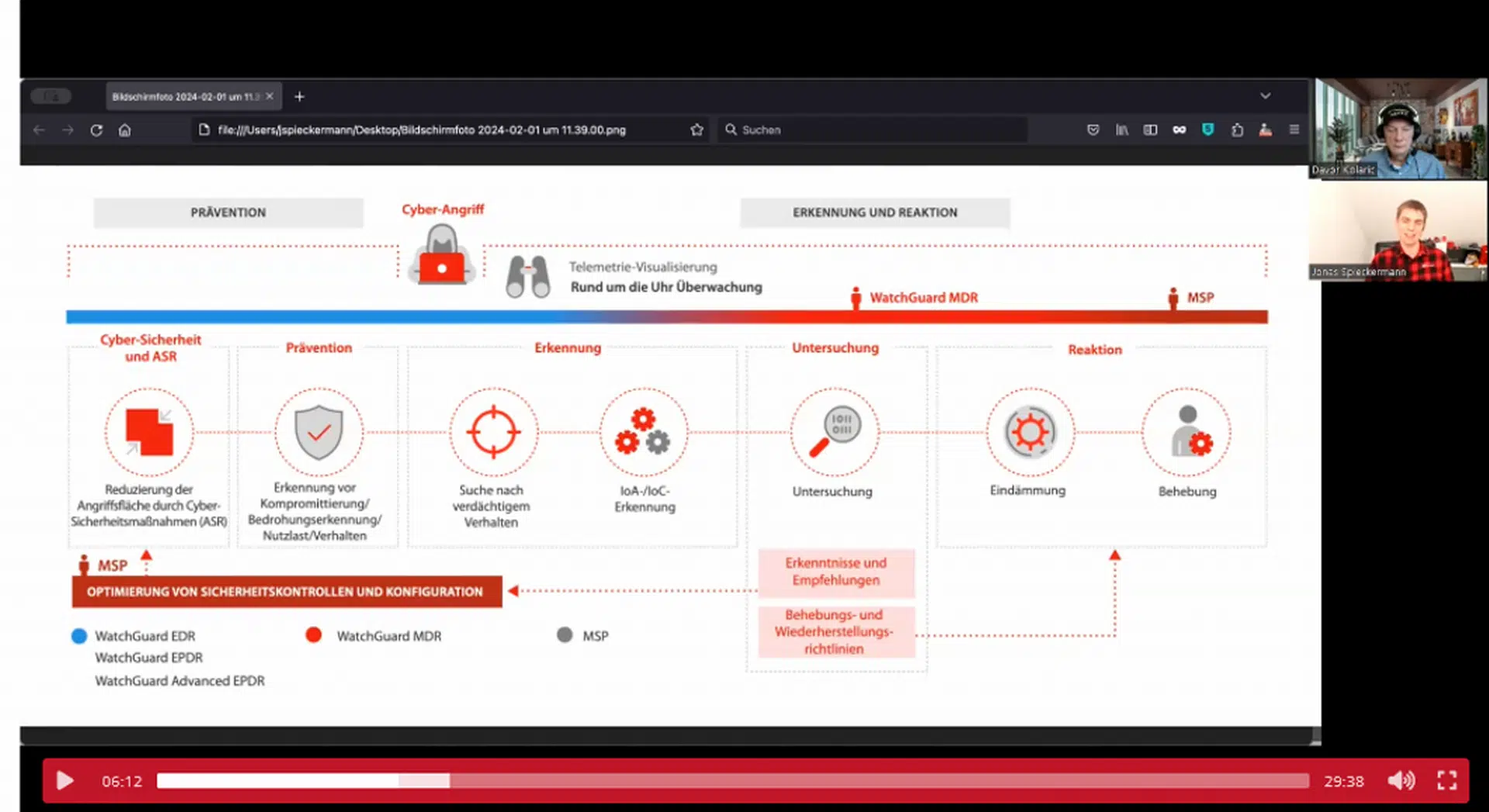
WatchGuard Managed Detection & Response – Erkennung und Reaktion rund um die Uhr ohne Mehraufwand